Card database
Knife Trap
Silent tempo card and small-action payoff
Knife Trap gives the card database a Silent-linked page for explaining when many small actions become tempo and when they become clutter.
Good when action density has payoff
Can clutter hands without draw support
Draft note
Small-action cards are best when they shorten dangerous fights or trigger a payoff that is already present. Knife Trap-style picks need draw, energy, and enough defense to avoid turning the hand into several cute actions that do not solve the current enemy timer.
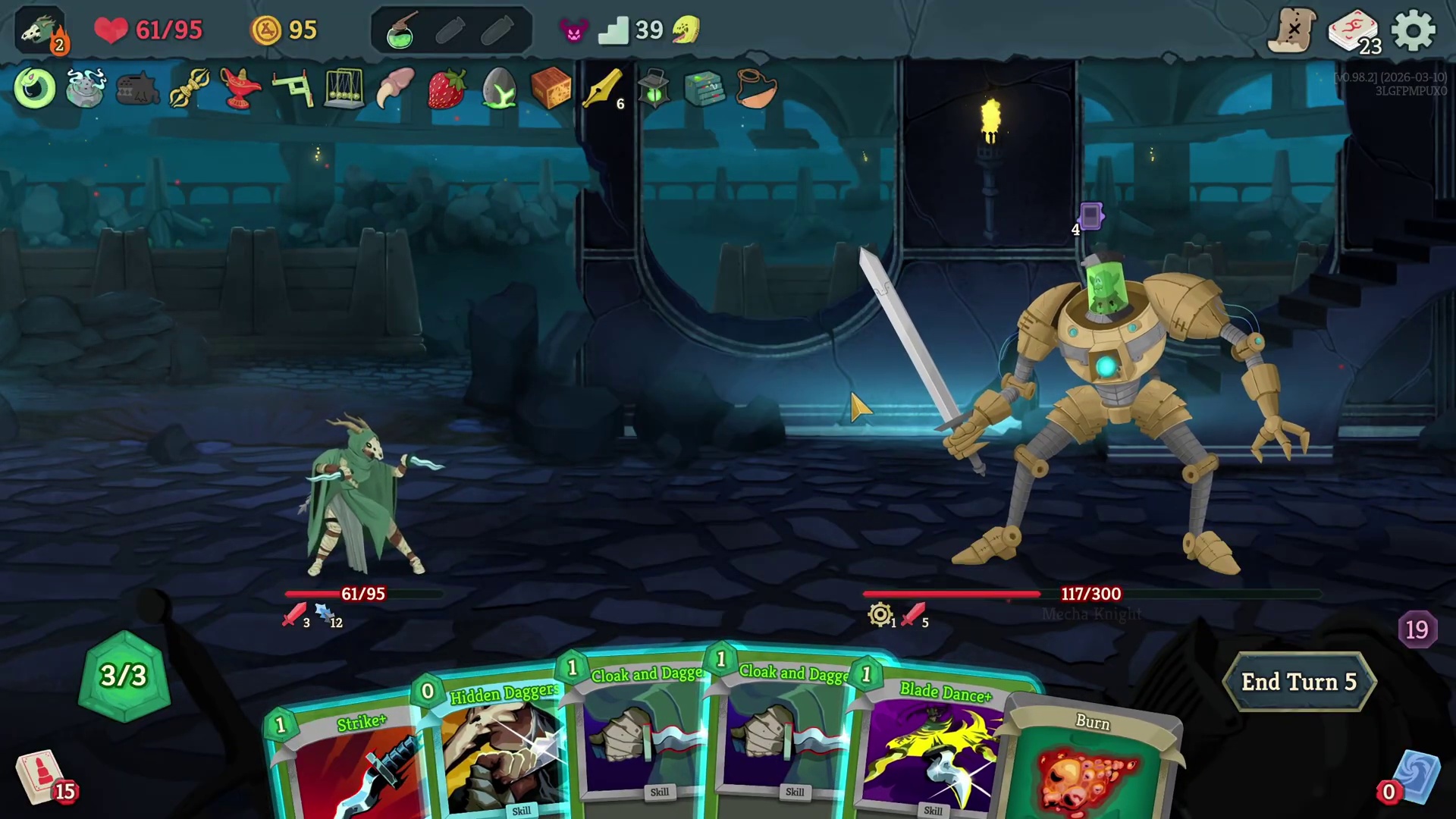
- Raise the card when the deck has payoff for many small actions.
- Lower it when the hand already lacks block or card flow.
- Use Silent pages to separate tempo from finished-engine spectacle.
Tempo versus clutter test
Knife Trap should be judged by whether the extra small actions change the current fight. It is tempo when the deck can convert many plays into damage, block, draw, or payoff before the enemy timer matters. It is clutter when those plays use hand space and energy without changing lethal, defense, or boss progress.
- Tempo: the deck already has shiv density, card flow, or payoff that turns extra plays into a safer turn.
- Clutter: the deck is missing block, draw, or scaling and only adds more small cards to manage.
- Watch the next elite or boss before treating Knife Trap as a build-around.
Support checklist
A Knife Trap pick wants three support layers: enough small-card volume to trigger it, enough defense to survive while playing the turn, and enough boss-relevant damage that the payoff matters in longer fights. Missing any layer keeps the card in the conditional lane.
- Small-card volume: shivs, cheap attacks, or card-flow turns that naturally play several cards.
- Defense: block or mitigation that remains available during the payoff turn.
- Boss damage: scaling or payoff that makes many small actions matter after hallway fights.
Boss caveat
Knife Trap can look excellent in hallway clips and still fail if the boss fight asks for larger damage, defense, or scaling. Before moving it up, confirm that the deck can turn small-action volume into boss progress rather than only clearing short fights.