Versioned tier list
Slay the Spire 2 Card Tier List
Patch-aware card rankings with character context, upgrade value, support density, and act pressure notes.
Draft cards by the next fight window
The best card on a tier list is not always the best card in the reward screen. A deck that lacks immediate damage should value boring attacks more highly. A deck that already survives Act 1 can start paying for draw, scaling, and synergy. This card tier list is organized around that tension: standalone fight-solving value first, build-around payoff second.

- Upgrade value can move a card up even when its base form is average.
- Character support matters more than global rank for engine cards.
- Cards that solve immediate danger deserve more respect in early acts.
How video review changes card notes
When a video shows a card winning a run, the editorial question is what made that win repeatable. Did the deck already have energy? Did a relic make the card cheaper? Did the boss matchup allow slow setup? The article should record those conditions so readers do not copy the pick into the wrong deck.
- Add a condition when a card needs relic, draw, or upgrade support.
- Add a warning when a card is strong only after the deck is already stable.
- Link card notes back to character pages when the rating is character-specific.
Ironclad and Silent evidence lane
The strongest current card-review coverage is for Ironclad and Silent, including every-card ranking footage and class-specific review notes. Treat that evidence as a way to write pick conditions, not as a solved Early Access table. Ironclad cards need checks for front-loaded damage, block, exhaust safety, and familiar-name bias. Silent cards need deck-state labels for tempo, draw, discard, poison, and shiv support.
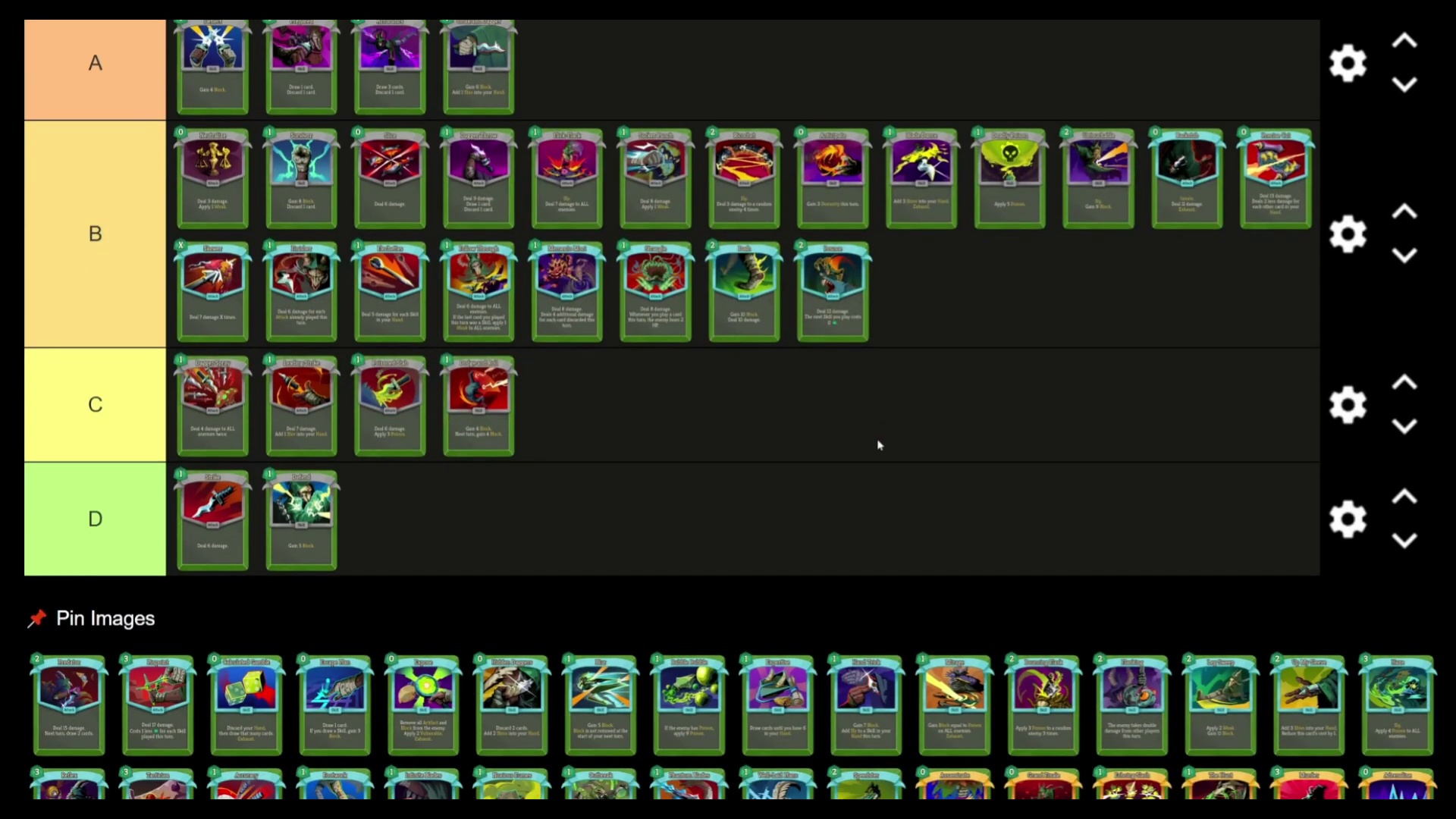
- For Ironclad, compare old instincts against current route pressure before raising a card.
- For Silent, mark whether a card is good immediately, good after card-flow support, or only good in a finished engine.
- Keep board-ranking movement provisional until combat footage shows the same pick surviving awkward fights.
Colorless cards need a separate caution layer
Colorless-card tier footage should not be merged blindly into character card rankings. A colorless card can look excellent in a finished deck and still be a weak early pick if it does not solve damage, block, draw, or energy pressure. The card tier list should record when a colorless pick is universally strong, when it is a shop luxury, and when it only works because a deck already has the right engine.
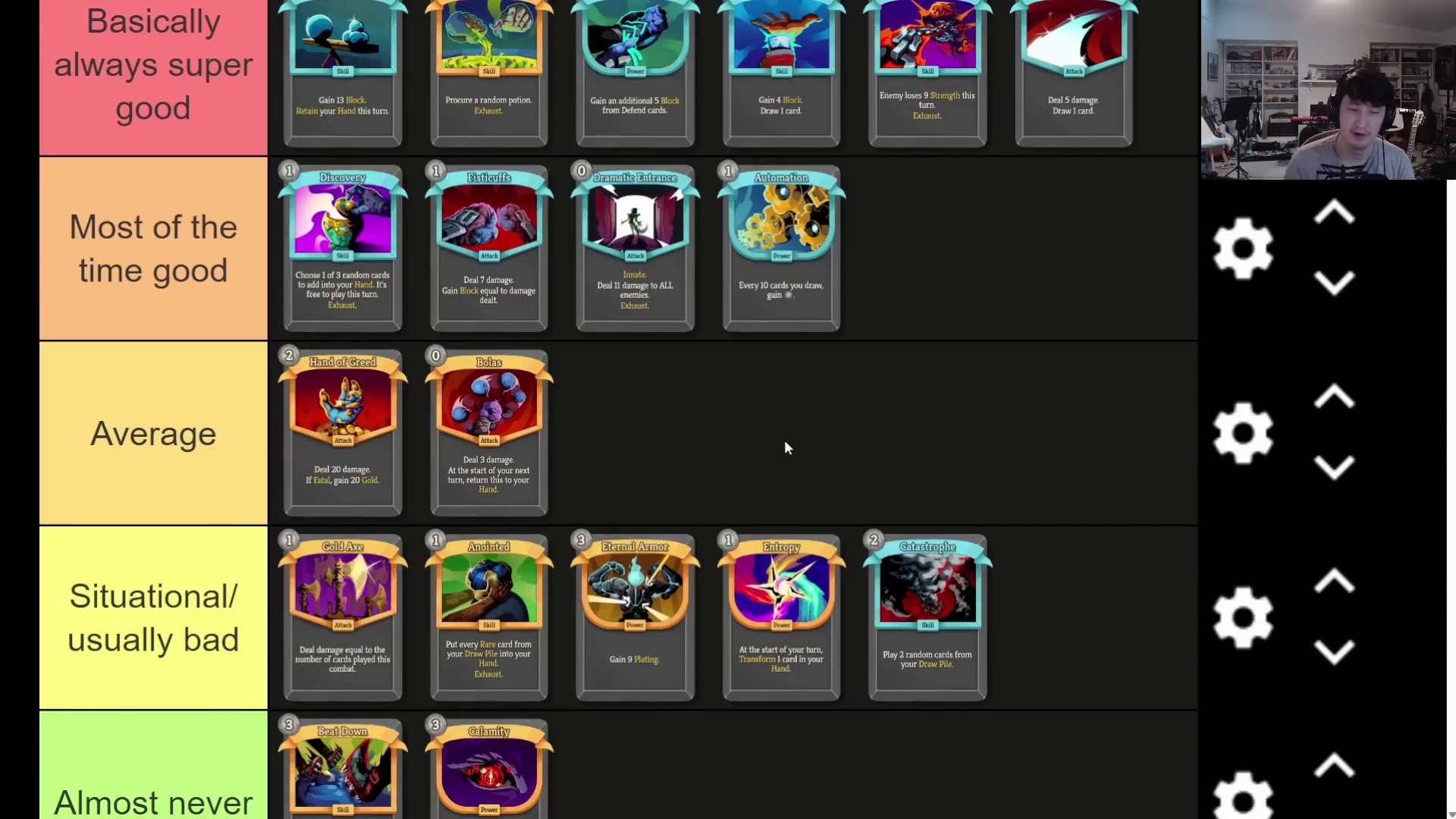
- Separate universal utility cards from engine-only payoffs.
- Treat shop colorless cards as gold decisions, not free reward-screen picks.
- Add character tags only when the clip shows why that character can use the card better.
Methodology
- Rank cards by whether they solve the next fight window.
- Show character context instead of global-only claims.
- Separate standalone value from build-around payoff.
- Use every-card review footage to write conditions, not permanent Early Access certainties.
- Cross-check Ironclad and Silent card-board claims against run footage before moving cards up.
Priority watchlist
Cards with enough impact or patch movement to deserve early pages.
Build dependent
Cards that need support before they become premium picks.