S2Spire 2 Guide
  • Tier Lists
  • Cards
  • Relics
  • Bosses
  • Characters
  • Puzzles
  • Patch Notes
  • Guides
  • Community
Search
S2Spire 2 Guide
S2Spire 2 Guide

A patch-aware Slay the Spire 2 guide database for returning players who want tier lists, cards, relics, bosses, and build notes without forum digging.

Database
  • Tier Lists
  • Cards
  • Relics
  • Bosses
  • Puzzles
  • Collectibles
Guides
  • Characters
  • Patch Notes
  • Guides
  • Search
  • Community
  • Source Footage
  • Coverage Map
  • FAQ
Launch Pages
  • Overall Tier List
  • Relic Tier List
  • Card Tier List
  • Returning Players Guide
Legal
  • Cookie Policy
  • Privacy Policy
  • Terms of Service
© 2026 Spire 2 Guide. All Rights Reserved.

SEO guide

Slay the Spire 2 Deck Builds

A deck-build hub for Slay the Spire 2 covering character builds, support density, combo reliability, and patch confidence.

Primary keyword: slay the spire 2 deck builds5 min read

Quick answer

Deck-build pages should teach how builds form naturally from rewards instead of forcing a pre-decided archetype every run.
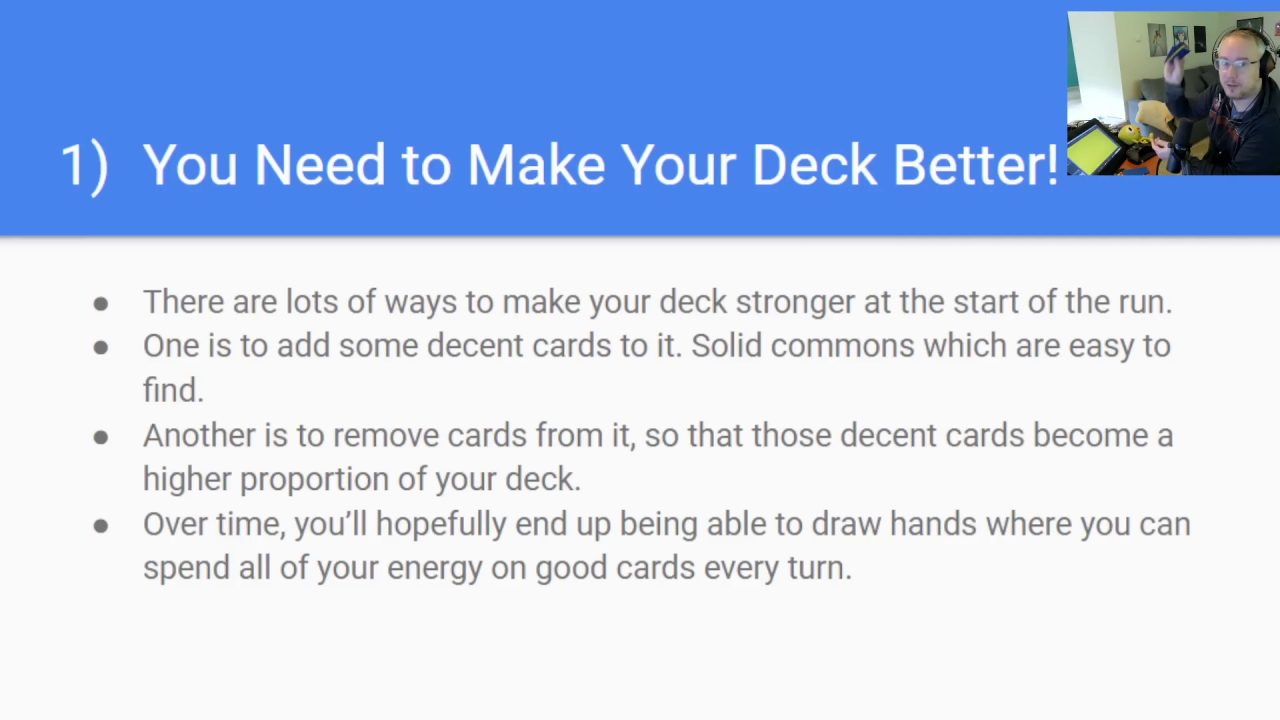
Slay the Spire 2 deckbuilding principles video still
Deck-build pages should show the principle behind the deck, not only the final card list.

What to check first

Use this page as a practical search-intent answer first, then follow the related database links for deeper card, relic, character, boss, and patch context.

  • Start with what the run offers.
  • Add payoff only after enough enablers exist.
  • Use relics to decide whether a build is realistic.

A deck is a set of jobs

A strong deck is not just a theme. It has jobs: early damage, block, scaling, card flow, and a way to finish bosses. A build page should show which cards perform each job and what the deck does when one piece is missing.

  • Explain the job of each core card group.
  • Show replacement options when the perfect card never appears.
  • Use final deck screenshots only after explaining the decisions that built it.

Build names are less important than support density

A named build can help readers search, but it can also make them force the wrong plan. The deck-build page should explain how many enablers, payoffs, defensive cards, and draw tools a plan needs before it becomes a real build.
Slay the Spire 2 best builds footage used for support-density review
Best-build footage should record required pieces and fallback plans, not only final damage.
  • Count enablers and payoffs before naming the build.
  • Write fallback plans for runs that miss one key card or relic.
  • Use character build pages for character-specific support-density rules.

Quick answer

A deck build is ready to commit when it has enough support density to survive bad hands and enough payoff to beat bosses. Until then, draft by jobs: damage, block, draw, scaling, and route safety. Exact build rankings are needs verification after major patches because support density can change quickly.

Common mistake

The common mistake is naming the build too early. If the player calls a deck a shiv build, orb build, block build, or companion build before it has enough support, the label can make them ignore the next fight. Let the deck prove the build through rewards, relics, and boss prep.

Evidence to collect next

The next deck-build evidence pass should capture the reward screen where the build begins, the fight where it almost fails, and the boss turn that proves the payoff is real. Those three clips separate a repeatable build from a highlight deck. Keep exact support thresholds and patch-specific build rankings marked needs verification until repeated runs show the same pattern.

Editorial note

This page is part of the first English-only content batch. It is written conservatively for Early Access and should be tightened whenever a major patch changes public information or run data.

Guide Status

Version: Early Access
Updated: Jun 11, 2026

Source Footage

1 linked videos

All

These videos are queued for transcript review, screenshot selection, source playback, and original guide writing. We use them as research material, then rewrite the advice in our own structure.

1Sources
1Stills
0Playable
1Screened
Five Principles of Deckbuilding gameplay still
Playback pending
Deckbuildingscreened

Five Principles of Deckbuilding

Five Principles of Deckbuilding For Slay the Spire 2 Spire2Side Chats.mp4

  • Turn deckbuilding principles into reusable drafting rules.
  • Capture skip-card and deck-size examples for strategy pages.
Open target page

Community Notes

Share run proof, matchup pressure, patch corrections, or exact video timestamps. Strong notes cite a patch, character, ascension, boss, or reward screen so they can become future page updates.

Run resultProof
Version namedPatch
Boss contextFight
TimestampClip

No approved notes yet. Be the first to submit a run note for review.

Start from

Related Pages

Slay the Spire 2 Best Builds

A build hub for Slay the Spire 2 that separates reliable build paths from high-roll combos and patch-sensitive experiments.

Slay the Spire 2 Build Tier List

A conservative Early Access build ranking hub for stable shells, character-specific plans, and patch-sensitive combo lanes.

Slay the Spire 2 Ironclad Build Guide

An Ironclad build guide for returning players covering front-loaded damage, exhaust support, strength scaling, and HP trading.

Slay the Spire 2 Necrobinder Build Guide

A Necrobinder build guide focused on companion planning, defensive structure, and support density rather than one perfect combo.

Slay the Spire 2 Defect Beginner Build

A beginner-safe Defect build guide for setup speed, orb support, bad-hand recovery, and early boss preparation.

FAQ

Should I force a build from floor one?

Usually no. Let early rewards define the lane, then commit once the deck has real support.

What makes a build reliable?

A reliable build has enough enablers, payoff, defense, card flow, and a backup plan for bad draws or missing rewards.

What should I draft before committing to a build?

Draft immediate damage, practical block, draw or consistency, and one boss-prep answer before taking narrow payoff pieces.